
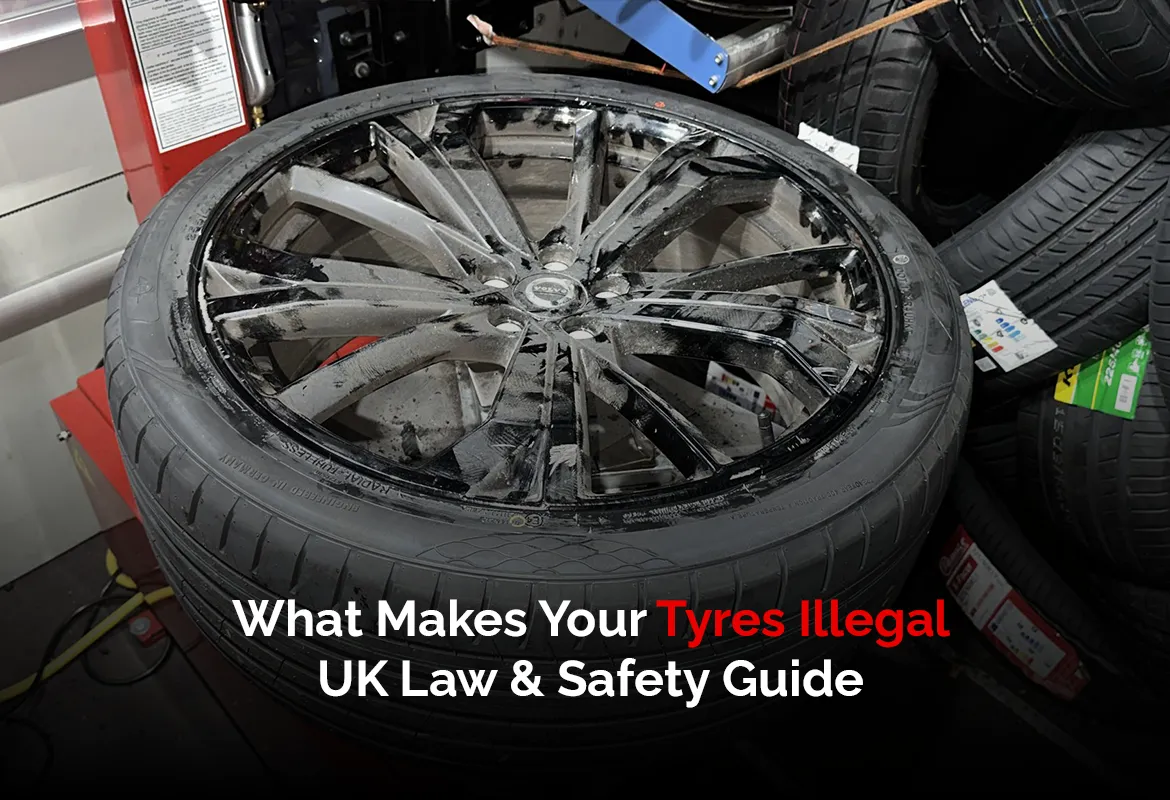
What Makes Your Tyres Illegal? Every driver knows the feeling, rushing out the door, hopping in the car, and noticing something off about the tyres. Maybe a crack, a worn patch, or that nagging thought that they’ve seen better days. But have you ever wondered if your tyres could actually be illegal to drive on?
In the UK, tyre safety isn’t just about comfort or fuel economy, it’s a matter of law. Driving with illegal tyres can lead to fines, penalty points, and even accidents. This complete guide from GripGo Mobile Tyre will help you understand what makes tyres illegal, how to check them yourself, and when it’s time for a replacement.
Why Tyre Laws Matter in the UK
Tyres are your car’s only point of contact with the road. Every turn, brake, and acceleration depends on them. That’s why UK tyre laws are designed to protect both drivers and pedestrians.
What Makes Your Tyres Illegal? According to the UK Government’s Highway Code, driving with tyres that don’t meet the legal standards can result in a £2,500 fine and three penalty points per tyre. So, four illegal tyres could cost you £10,000 and 12 points, enough for an instant driving ban.
1. Tread Depth – The Most Common Cause of Illegal Tyres
The legal minimum tread depth in the UK is 1.6mm across the central three-quarters of the tyre, around its entire circumference.
To put it simply, the tread helps your tyres grip the road, especially in wet conditions. Once it wears below that limit, braking distance increases dramatically.
Quick Check Tip:
Take a 20p coin and insert it into the tread groove. If you can see the coin’s outer rim, your tyre tread is too shallow, and it’s time to replace it.
2. Tyre Damage – Cracks, Bulges, and Cuts
Ever spotted a bulge or deep cut on your tyre’s sidewall? These might seem minor, but they can make your tyres illegal and unsafe.
Damage can occur from potholes, kerb impacts, or even age. The Royal Society for the Prevention of Accidents warns that damaged sidewalls weaken the tyre’s structure, increasing the risk of a blowout.
If you notice:
- Exposed cords
- Sidewall bulges
- Large cuts or splits
…it’s time to get your tyres checked by a professional like GripGo Mobile Tyre right away.
3. Mixing Different Tyres
What Makes Your Tyres Illegal? You might not think twice about replacing just one tyre, but mixing different types (e.g., summer and winter tyres) or mismatched sizes on the same axle can also make your car illegal.
The Tyre Safe organisation notes that all tyres on an axle must be the same type, structure, and size. Mixing radial and cross-ply tyres, for example, is against UK road regulations.
4. Tyres Fitted Incorrectly
What Makes Your Tyres Illegal? Yes, even a new tyre can be illegal if it’s fitted the wrong way. Many tyres are directional or asymmetric, which means they must be mounted in a specific direction or position on the car.
Always check for markings like “Outside” or “Rotation →” on the tyre’s sidewall. Installing them incorrectly reduces grip and may lead to MOT failure.
5. Underinflated or Overinflated Tyres
Driving with tyres that aren’t inflated to the correct pressure might not seem like a legal issue, but it can make your vehicle unroadworthy.
Underinflated tyres cause uneven tread wear, higher fuel use, and less control. Overinflated ones reduce grip and increase the risk of punctures.
To check your tyre pressure, look inside the driver’s door frame or your car’s manual for the recommended PSI. You can also use Tyre pressure checker.
6. Tyre Age – The Hidden Danger
Even if a tyre looks fine, age can silently make it unsafe. Rubber hardens over time, losing flexibility and grip. The UK government recommends replacing tyres every 6 to 10 years, regardless of tread depth.
You can check the tyre’s age by reading the DOT code on its sidewall. The last four digits show the week and year of manufacture. For example, “2419” means it was made in the 24th week of 2019.
A Quick Story – The Cost of Ignoring Tyre Safety
Tom, a young driver from Manchester, ignored a slight vibration in his car one morning. A week later, his front tyre burst on the motorway due to a hidden sidewall bulge. Luckily, no one was hurt, but his car insurance refused to cover the damage, the tyre was deemed illegal under UK law.
Stories like Tom’s remind us how easily small issues can become dangerous and costly problems.
Step-by-Step: How to Check if Your Tyres Are Legal
You don’t need to be a mechanic. Here’s a simple 5-minute tyre check anyone can do:
- Inspect tread depth – Use a tread gauge or the 20p test.
- Look for visible damage – Bulges, cuts, or exposed cords.
- Check tyre pressure – Use a digital gauge or petrol station inflator.
- Verify the DOT code – Replace tyres older than 6 years.
- Check fitting direction and type – Ensure correct alignment and matching pairs.
If anything looks off, book a mobile tyre inspection with GripGo Mobile Tyre, we come to you, anywhere in the UK.
Penalties for Driving on Illegal Tyres
Driving on illegal tyres can lead to:
- £2,500 fine per tyre
- 3 penalty points per tyre
- MOT failure
- Insurance invalidation
For many, the fine alone is enough to replace all four tyres twice over. It’s simply not worth the risk. You can read about the penalties on the UK Tyre Law page.
When to Replace Tyres
If your tyres are:
- Below 3mm tread depth (even though 1.6mm is legal)
- Over 6 years old
- Showing any damage or vibration
- Causing longer braking distances
…it’s time to consider replacements.
At GripGo Mobile Tyre, we offer on-site tyre replacement, fitting, and balancing, at your home, work, or roadside. You stay safe, save time, and stay legal.
Tips to Keep Your Tyres Legal and Safe
- Check your tyres monthly for pressure and wear.
- Rotate tyres every 6,000 miles to even out wear.
- Avoid potholes and kerb impacts.
- Don’t mix tyre brands or types on the same axle.
- Replace tyres early rather than waiting for MOT failure.
Consistency in care is the best way to avoid unexpected fines or accidents.
FAQs
Can I drive with a tyre bulge or sidewall damage?
No. Any visible bulge, split, or exposed cord makes your tyre unsafe and illegal. Replace it immediately to avoid fines and accidents.
How much is the fine for illegal tyres in the UK?
You can face up to £2,500 per illegal tyre and 3 penalty points. Four illegal tyres can lead to a £10,000 fine and a driving ban.
How do I check if my tyres are legal?
Use a 20p coin to measure tread depth, inspect for cracks or bulges, and check the tyre’s age using the DOT code. If unsure, call GripGo Mobile Tyre for help.
Do old tyres fail MOT?
Yes, tyres over 6 years old or with signs of damage or wear can cause an MOT failure. Regular checks keep your vehicle road-legal.
Final Thoughts of What Makes Your Tyres Illegal?
Understanding what makes your tyres illegal is more than ticking a legal box, it’s about protecting yourself, your passengers, and everyone else on the road.
Your tyres are the foundation of your car’s safety, and staying proactive can save money, stress, and even lives.
So, before your next journey, take a moment to check your tyres, or let GripGo Mobile Tyre handle it for you. Because when it comes to safety, every millimetre counts.